Arts & Culture
Sterling Heights' Upton House Museum opens weekly self-guided tours Wednesdays and second Sundays
The 1866–67 farmhouse is one of the city’s few surviving 19th-century homes, and its land now lies beneath City Hall, the library and Stevenson High School.
By Staff · October 14, 2026
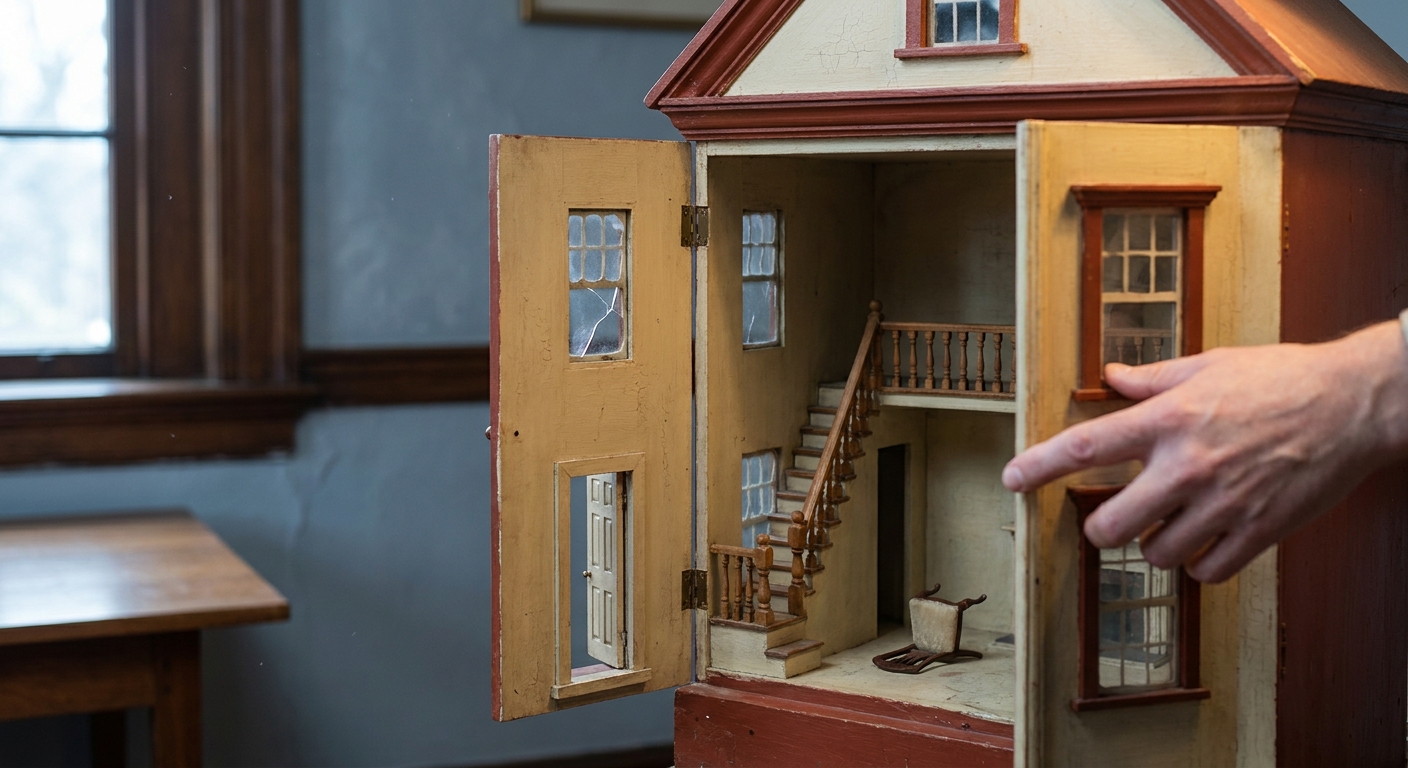
In a city people tend to describe by its strip malls and new construction, a brick Victorian farmhouse still stands on Utica Road — built in 1866–67, a century before the subdivisions around it. Every Wednesday from 1 to 4 p.m. and the second Sunday of each month, its door opens for self-guided tours, a standing appointment that keeps Sterling Heights' oldest roots on the calendar rather than behind glass.
The house is one of only a few surviving 19th-century homes in the city, and keeping it open week after week is a deliberate commitment. The City of Sterling Heights maintains and programs the museum with the support of the seven-member, unpaid Historical Commission, which manages the city's historical collection, exhibits and tours.
Walk through and look around
The tours are self-guided, so visitors move at their own pace — a good fit for families with children and anyone who wants to linger. Upstairs, five themed rooms chart the city's development from township to city, including a Play Room with vintage toys and a handmade wooden dollhouse built for Maud E. Upton in 1914, a Transportation and Industry display holding a timber said to be from the Clinton-Kalamazoo Canal, a Home Life Room of farm and household objects, and a Family Chronicles Room of photographs of local farm families. The full tour includes stairs, and the second floor is not wheelchair accessible.
A farm beneath the public buildings
William Upton built the house with his wife, Sarah Aldrich Upton, and the couple raised four children there. The farm passed through the Ahrens and Heldt families before part of it was conveyed to the State of Michigan in 1922 for Dodge Park. All told, the Upton farm covered about 136 acres — land that now lies beneath some of the city's most familiar public buildings: Sterling Heights City Hall, the Justice and Library buildings, the Community Center and Stevenson High School. The area was organized as Jefferson Township in 1835, became Sterling Township in 1838, and was incorporated as the City of Sterling Heights on July 1, 1968.
How the house was saved
Saving it was a civic effort decades in the making. The Macomb Child Guidance Center acquired the property in 1964, the city purchased it in the late 1970s, and a 1976 bicentennial project by the Cultural Commission launched the preservation work, with the Friends of the Upton House raising renovation funds and William Kessler and Associates designing the work. Restoration was completed on October 31, 1982, when the city opened the house with Upton descendants, officials and residents on hand. State historical-site designation followed in 1983, and the National Register of Historic Places in 1985.
Registration is required for Wednesday tours — call the museum at (586) 446-2495 — and a household may register up to six people. The second-Sunday visits generally don't require registration, which keeps the experience a low-barrier family outing.
The schedule itself is the point. If you've passed the brick house on Utica Road a hundred times and never turned in, this Wednesday afternoon or the next second Sunday is the open door — no special occasion, just a neighbor finally walking through.