Local News
Sterling Heights Athletic Hub Opens: What the $10M Millage-Funded Facility Means for Residents
By Staff · July 20, 2026
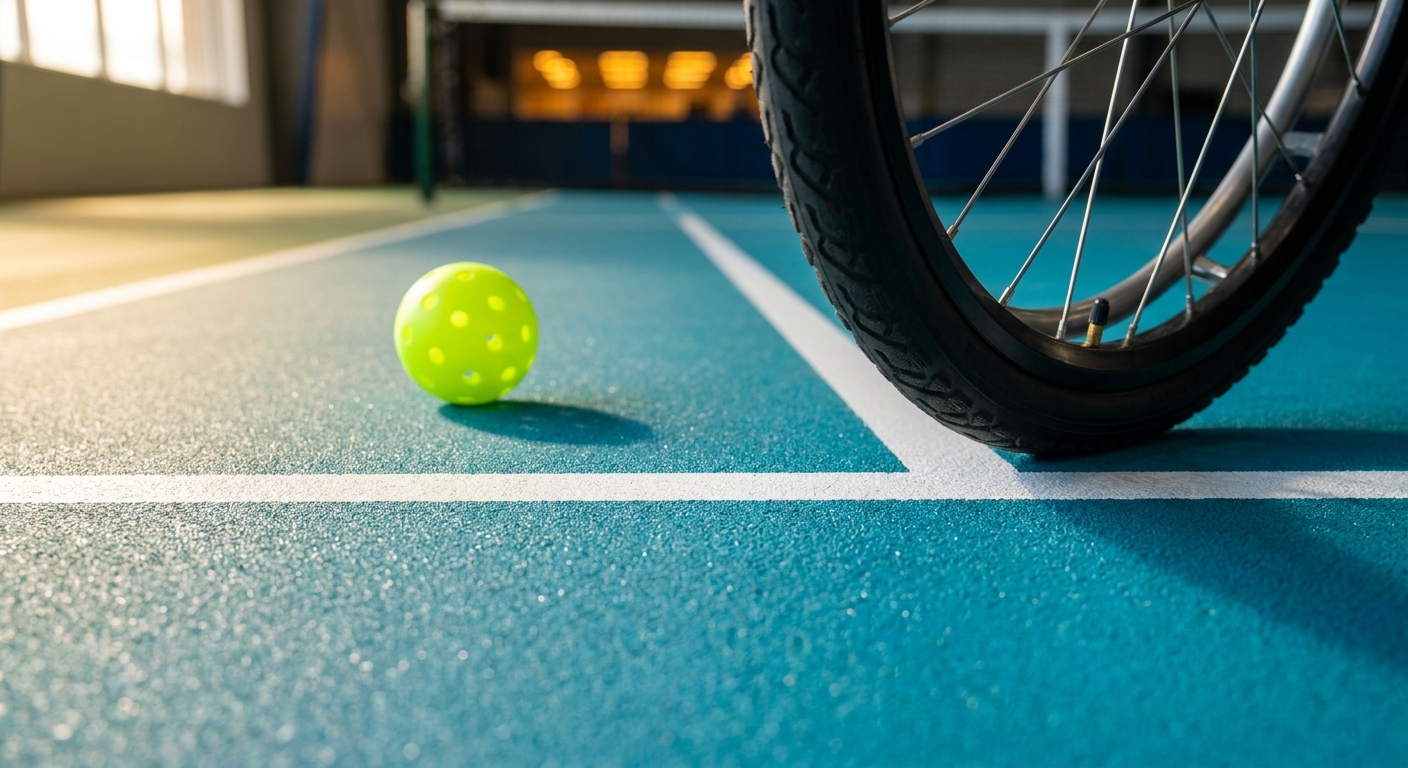
Sterling Heights residents who approved a 0.95-mill property-tax increase in November 2024 can now see one of its most visible returns: a $10 million, 36,000-square-foot indoor facility that opened to the public July 13, two days after a July 11 ribbon-cutting. Built around pickleball and table tennis, with adaptive sports programming planned, the Sterling Heights Athletic Hub is an early test of the deal voters made with City Hall: whether taxpayer-funded recreation will serve the full community, or whether residents funded an amenity tailored to suburban pickleball enthusiasts while adaptive sports and youth programming remain rhetorical commitments.
The Athletic Hub is at 35630 Van Dyke Ave., just north of 15 Mile Road, inside the former Spirit Halloween building. Its main draw is nine indoor pickleball courts built to USA Pickleball standards, including a championship court with viewing stands. The center also has six wheelchair-accessible table tennis tables like those used in U.S. Open and Paralympic competition.
There is more than court space. The building includes the Rally Room for meetings and parties, a cafe, the social area known as the "pickle pit," an adult changing table, a specially equipped changing room for people with disabilities, a sensory break room and a lactation room.
Mark DiSanto, Recreation Superintendent – Facilities for Sterling Heights Parks and Recreation, said the facility is intended to serve "all levels and abilities and inclusiveness."
The city describes the Athletic Hub as Metro Detroit's only municipally funded facility devoted to pickleball. That is a selling point, but it also raises the larger question residents may have after voting for the Pathway to Play and Preservation millage. The campaign explicitly promised six major improvements: construction of a new indoor pickleball complex, development of Red Run Park with a dog park and 24-hour satellite library, park enhancements at Rotary Park and Belvedere Park, creation of 12 miles of new trail, sidewalk completion and maintenance with elimination of sidewalk special assessments for residents, tree planting to restore the canopy decimated by Emerald Ash Borer, and preservation of greenspaces through land purchases.
The millage was approved for a 15-year period. Other projects include Red Run Park in southern Sterling Heights, planned with a dog park, pickleball courts, a trail and a 24-hour satellite library. The program also funds reforestation efforts, with 3,200 trees planted in 2026. A Land Bank is established to acquire undeveloped or underused parcels for permanent green space or recreation.
At the hub, the clearest immediate benefit for residents is free drop-in use. Non-residents pay a $5 daily drop-in fee. But free access has a practical limit: it does not cover court reservations, which are likely to matter most to families, regular players and groups that need guaranteed time.
Residents pay $11 an hour for weekday reservations and $14 an hour on weekends. Non-residents pay $14 an hour on weekdays and $22 an hour on weekends. Courts can be booked as far as three months ahead.
For the 2026 summer schedule, the facility is open Monday through Saturday and closed Sundays. Hours are 9 a.m. to 7 p.m. Monday, Tuesday, Wednesday and Friday, and 9 a.m. to 5 p.m. Thursday and Saturday. Players 12 and younger must be with an adult. Players 13 and older can play independently with a Teen Passport.
The city expects to offer pickleball lessons, leagues, tournaments and adaptive sports at the hub, though lessons and programs will carry modest registration fees. Weekly schedules, including any adaptive-sports offerings, are posted through the city's myshpr.net portal and Parks and Recreation e-newsletters.
Sterling Heights Parks & Recreation already operates adaptive sports programs coordinated by a certified therapeutic recreation specialist trained in the medical, social, emotional and behavioral needs of people with disabilities. The department's adaptive programs serve people with developmental delays, cognitive impairments, physical impairments or autism, and include sports such as kickball, softball, basketball and fitness classes, as well as social offerings including monthly themed events, art and cooking. Existing programs include NEAR Adaptive Basketball in American and National League divisions and Adaptive Yoga, with schedules running primarily in fall and winter 2025-2026.
The specific adaptive sports schedule for the Athletic Hub, however, has not been published one week after opening, leaving residents unable to verify whether the inclusive programming cited at the ribbon-cutting is a year-round commitment or seasonal.
City officials are betting that pickleball's expanding audience will fill the courts. Pickleball participation among youth ages 10 to 17 and young adults ages 18 to 34 has seen significant increases in recent years, with city officials noting overall participation growth of 200 to 300 percent. The July 11 opening included a 9:45 a.m. ribbon-cutting and a community open house from 10 a.m. to 2 p.m., with giveaways for the first 1,000 visitors.
The city has not publicly laid out how it will measure whether the Athletic Hub is meeting the inclusiveness and accessibility commitments that secured voter approval, what usage or demographic metrics will be tracked, or what formal oversight or reporting the millage requires.
Residents who want to hold the city accountable should monitor the myshpr.net portal for adaptive sports schedules, track whether drop-in hours remain free and friction-free, observe whether the user base diversifies beyond traditional demographics, and watch for annual millage spending reports as the 15-year plan unfolds.